
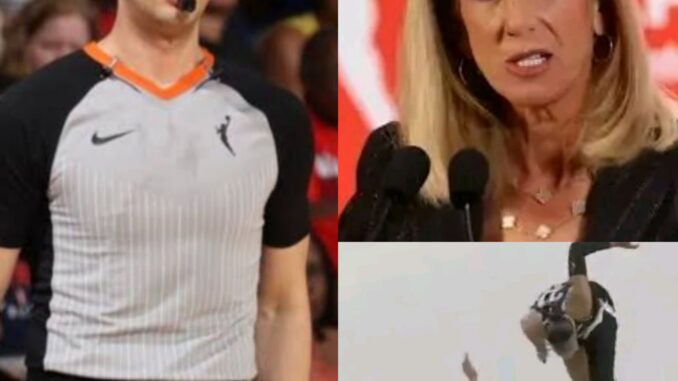
In a rare and decisive move, WNBA Commissioner Cathy Engelbert has suspended referee Isaac Barnett for 10 games following a chaotic and error-filled Indiana Fever vs. Las Vegas Aces matchup that left players, coaches, and fans furious.
The high-stakes contest, which swung wildly in the final minutes amid missed calls, inconsistent foul decisions, and mounting physicality, descended into near-pandemonium. Both teams traded accusations of preferential treatment as the game featured dozens of fouls, technicals, and heated exchanges with the officiating crew. Barnett, who served as crew chief, drew the bulk of the criticism for several pivotal no-calls and questionable whistles in the closing stages that appeared to tilt momentum.
League sources indicated the suspension stems from a formal review of the game tape, which highlighted multiple critical errors that the WNBA deemed “unacceptable for a playoff-caliber contest.” Engelbert’s office released a brief statement: “The integrity of our competition depends on consistent, accurate officiating. After thorough evaluation, we have determined that the performance in question fell short of the standards required. Referee Isaac Barnett will serve a 10-game suspension without pay.”
The decision marks one of the stiffest penalties handed to an official in recent WNBA history and signals the league’s attempt to address growing frustration over officiating that has simmered throughout the season and boiled over in the playoffs. Coaches from both the Fever and Aces had publicly questioned calls during and after the thriller, with postgame comments focusing on late-game sequences that many observers described as “chaotic and terrible.”
Barnett, a veteran official who has worked numerous high-profile games, has not issued a public response. The suspension is expected to keep him off the floor for a significant stretch of the remaining schedule, forcing the league to reshuffle crews at a critical time.
Fans on social media erupted with mixed reactions—some praising the accountability, others arguing the penalty should have been harsher or that systemic issues in officiating require broader reform. The Fever-Aces series had already been defined by physical play and disputed calls; this latest development only intensifies the spotlight on how the league polices its own officials.
By acting swiftly and firmly, the WNBA aims to restore confidence in the product on the floor. Whether a 10-game ban for one referee is enough to quiet the storm remains to be seen, but for now, the message is clear: even the whistle-blowers are not above accountability when the game descends into chaos.
Leave a Reply