
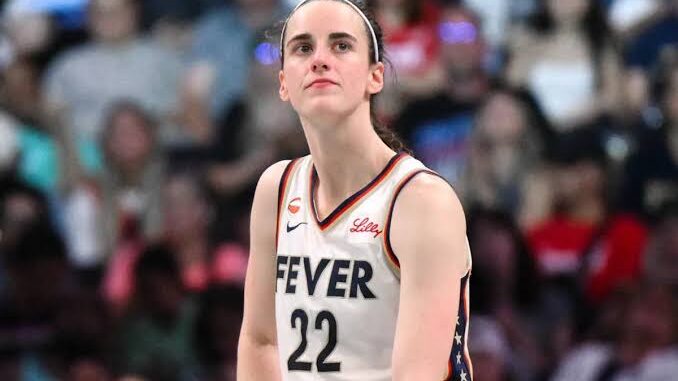
An increasingly debated opinion surrounding the Indiana Fever is gaining attention: Caitlin Clark is not simply another star on the roster — her presence fundamentally changes how the Fever operate. The Fever have several talented players, including Aliyah Boston and Kelsey Mitchell, but Clark’s ability to create offense has become central to the team’s identity.
 The argument should not be interpreted as disrespect toward Boston. Boston is an elite frontcourt player who has developed into one of Indiana’s most important players. She and Clark were both selected to represent the United States at the 2026 FIBA Women’s Basketball World Cup, where they helped Team USA win gold.
Still, the controversial question remains: what would Indiana look like without Clark? That hypothetical exposes just how much offensive responsibility the 2024 No. 1 overall pick carries. Clark’s shooting range, passing ability, transition play and pick-and-roll creation force defenses to make difficult decisions.
Calling Clark “the system” is obviously an opinion rather than an official team description, but there is evidence that Indiana’s offense is built heavily around her ability to create advantages. The Fever themselves recently described Clark and Kelsey Mitchell as the team’s “twin engines” powering the offense.
Clark’s impact also goes beyond simply scoring points. Her ability to stretch the defense can create opportunities for Boston around the basket, while her passing can give teammates easier scoring opportunities. That relationship between Clark and Boston has become one of the defining combinations of the Fever’s current roster.
Boston, meanwhile, provides something Clark does not: interior scoring, rebounding, physical defense and a reliable presence near the basket. The Fever’s success therefore cannot realistically be reduced to one player. The team’s identity is built around multiple stars, with Clark, Boston and Mitchell occupying major roles. The WNBA itself highlighted those three players when announcing Indiana’s nationally televised 2026 schedule.
There is also a strong counterargument to the “lottery team” claim. Indiana has demonstrated that other players can step up when Clark is unavailable. In 2025, for example, the Fever defeated Washington without Clark, with Kelsey Mitchell scoring 23 points and Boston contributing 10. That game does not prove Indiana would perform the same way over an entire season without Clark, but it does show that the team is capable of winning games without her.
Another important factor is the development of the roster around the stars. Indiana has continued adding and developing players, meaning the team’s future cannot be judged solely through the Clark-Boston partnership. The Fever’s official site has also highlighted player development as a contributor to breakthroughs from younger players.
What makes the debate particularly interesting is that Clark herself has recently shown why the argument exists. On August 29, she recorded 34 points and 12 assists in a Fever victory over Connecticut, while Mitchell also scored 34 points. The performance demonstrated that Indiana can have multiple offensive weapons while Clark remains the primary creator.
At the same time, calling Boston merely a supporting player would overlook her importance. Boston was also selected for the 2026 USA Basketball World Cup roster and was recognized by the Fever for her continued progress toward All-WNBA consideration. Her presence gives Indiana a completely different dimension on both ends of the court.
So perhaps the most accurate version of the unpopular opinion is this: Caitlin Clark may be the player who most dramatically changes Indiana’s offensive ceiling, while Aliyah Boston is one of the players who makes the overall system work. Those roles are different, and comparing them as though only one can matter misses what makes the Fever dangerous.
The debate will continue because Clark and Boston represent two different forms of basketball influence. Clark can control the game from the perimeter through shooting and playmaking, while Boston can control stretches of games through interior scoring, rebounding and defense. The Fever’s challenge is maximizing both.
And with Indiana currently preparing for the latter part of the 2026 season, the conversation is no longer simply about whether Clark and Boston are individually great. It is about how much the Fever’s entire structure depends on their partnership. The team’s official coverage continues to feature both players prominently, including their recent joint media availability and their World Cup success.
Unpopular opinion or fair basketball analysis? One thing is clear: saying “Aliyah Boston is great, but Caitlin Clark is the system” will continue to generate plenty of debate among Fever fans — especially when the question becomes what Indiana would actually look like if its offe nsive engine were removed.
Leave a Reply