
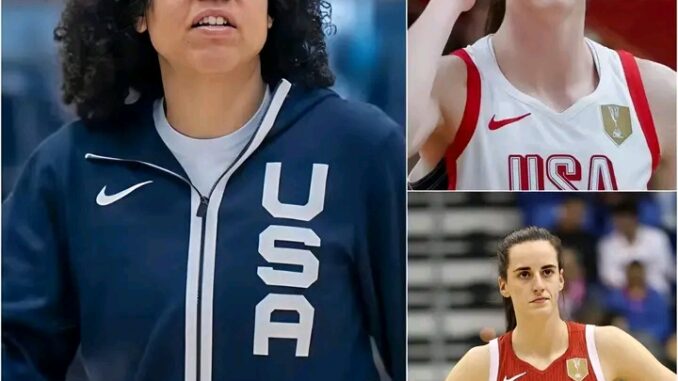
Team USA coach Kara Lawson has made it clear she likes her current starting group and sees no urgent need to change it, even as Caitlin Clark continues to reshape games the moment she steps on the floor at the 2026 FIBA Women’s World Cup.
Lawson’s explanation centers on the veterans’ ability to set a strong tone. “I think that our starting group’s done a pretty good job of getting us off to good starts, and rotationally from game to game we could change things, but I like where we are right now,” she said when asked about inserting Clark, Paige Bueckers or Angel Reese into the starting five ahead of the knockout stage. The opening unit of Chelsea Gray, Jackie Young, Kahleah Copper, Napheesa Collier and Breanna Stewart has remained intact through group play and into the quarterfinals.
That stance has only intensified the debate. Against China in the opener, Clark came off the bench and immediately took control: 14 points, a record-setting 11 assists with zero turnovers, and a team-best +30 in 25 minutes. She pushed the tempo, found teammates in rhythm and helped turn the game into a 94-61 rout. The performance marked the most assists by a U.S. player in a World Cup debut and the first instance of at least 10 assists without a turnover in the tournament’s tracked history.
The pattern continued against Czechia. Once again the younger reserves provided a clear spark. Clark logged 22 minutes with 9 points and 7 assists while the second unit’s pace and playmaking stretched the lead in a 105-64 victory. Across the early games she has led Team USA in minutes played and assists, showing that her production is not limited by the bench role.
Fans see the contrast and keep asking the same question: if Clark consistently lifts the offense and the younger lineup repeatedly changes the energy, why keep her in reserve? Lawson’s preference for experience and proven starts offers one answer. Clark herself has embraced the assignment, stressing a team-first approach and a willingness to contribute in whatever role is asked.
As the knockout rounds deepen, the gap between the coach’s measured explanation and Clark’s visible impact only grows harder to ignore. The deeper the tournament goes, the louder the questions become.
Leave a Reply