
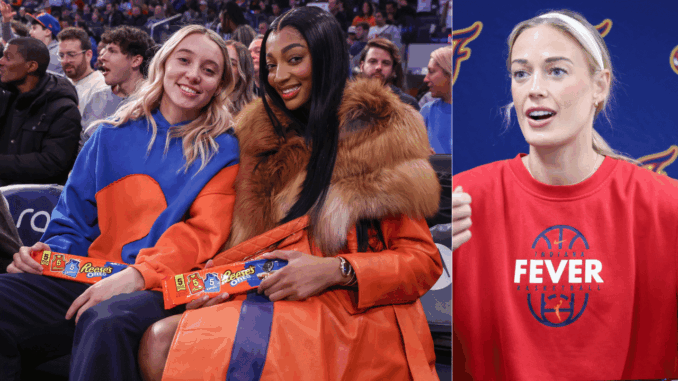
The WNBA’s rapid rise in popularity has been one of the biggest stories in women’s basketball, and Indiana Fever guard Sophie Cunningham previously offered an interesting explanation for why the league should embrace its new generation of stars.
During a February 2026 appearance on the Like a Farmer podcast, Cunningham discussed the impact that young stars such as Angel Reese, Paige Bueckers and Cameron Brink have had on the WNBA. Rather than viewing their enormous fan bases as competition, Cunningham argued that the league should see their popularity as an opportunity.
 Cunningham specifically pointed to the players’ ability to bring the audiences they developed during their college careers into the professional game. Reese became a household name during LSU’s championship run, while Bueckers built a massive following during her time at UConn. Brink also became one of the most recognizable players in college basketball at Stanford.
According to Cunningham, social media played a major role in creating that connection between college basketball and the WNBA. The younger generation arrived in the professional league with followers who were already invested in their careers, personalities and performances.
That, in Cunningham’s view, has helped introduce new fans to the WNBA. Instead of seeing the attention surrounding younger players as something that takes away from established veterans, she suggested that players should recognize how much the increased exposure can benefit everyone.
Her message was particularly direct: veterans should be “thankful” rather than jealous of the attention the younger stars receive. Cunningham argued that the growing spotlight creates opportunities for players across the league to benefit financially and commercially.
“Go use it. Go take advantage of it,” Cunningham said while discussing the opportunities created by the league’s growing popularity. Her comments reflected a broader belief that increased attention on individual stars can ultimately strengthen the entire competition.
The timing of Cunningham’s comments was significant because the WNBA had already entered a period of unprecedented attention. Caitlin Clark’s arrival had dramatically expanded mainstream interest, while Reese, Bueckers and other young stars added further storylines and rivalries that continued attracting fans.
Reese, in particular, has remained one of the league’s most recognizable young personalities. Her college rivalry with Clark helped make her a major name before she even entered the WNBA, and her professional career has continued to generate significant attention.
Bueckers has followed a different path but has similarly carried a large fan base into the professional game. Her decorated UConn career established her as one of the most recognizable players of her generation, and her transition to the WNBA gave those supporters another reason to follow the league.
Cunningham’s comments also highlighted an important shift in how professional athletes can build their careers. Social media allows players to develop personal brands before reaching the highest level, meaning they can enter professional sports with millions of potential supporters already familiar with them.
That dynamic can be particularly valuable for the WNBA because the popularity of individual players can translate into greater television interest, social-media engagement, merchandise sales, sponsorship opportunities and attendance.
Cunningham therefore appeared to view the rise of Reese and Bueckers not as a threat to veteran players but as part of a larger expansion of the women’s game. Her argument was essentially that everyone has something to gain when more people are paying attention.
The league’s current landscape illustrates that point. Reese continues to make headlines on the court, while Bueckers has quickly become an important part of the Dallas Wings’ future. Recent coverage has also highlighted Reese’s record-setting production, including her 29th double-double of the 2026 season.
Ultimately, Cunningham’s message was about opportunity. The WNBA’s rising stars have brought enormous audiences with them, and she believes the smartest response from established players is to embrace that attention and find ways to benefit from the league’s growth.
Her comments remain relevant as the WNBA continues to attract unprecedented interest. For Cunningham, the emergence of Reese, Bueckers, Brink and other young stars represents something to celebrate—not something for veteran players to resent.
The bigger picture is clear: the WNBA is entering an era in which established stars and young superstars can grow together. And if Cunningham’s philosophy is followed, the success of one player can become an opportunity for the entire league.
Leave a Reply