
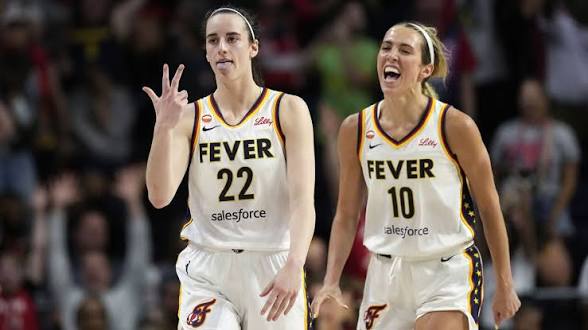
The Indiana Fever enter the final stretch of the 2026 WNBA regular season sitting at 26-14, a record that would normally be considered excellent. However, there is an increasingly loud argument among fans that the Fever should have been higher in the standings given the talent available to head coach Stephanie White.
 The headline opinion is simple: 26-14 is a strong record, but fifth seed does not necessarily reflect the ceiling of this roster. Indiana has Caitlin Clark, Aliyah Boston, Kelsey Mitchell and a number of experienced contributors, while White has been coaching the team throughout the season. The Fever’s current position has therefore created debate about whether the team has maximized its opportunity.
Clark’s presence naturally makes expectations enormous. The Fever’s official roster lists her as one of the team’s central pieces, while her 2026 numbers include 22.6 points, 3.9 rebounds and 8.5 assists per game. Those numbers underline why expectations around Indiana have been so high.
Boston has also remained a major part of Indiana’s core. The former No. 1 pick gives the Fever an interior presence to complement Clark’s perimeter play, creating the foundation of a roster that many observers expected to compete near the top of the league.
And then there is Kelsey Mitchell. Her 2026 season has been particularly important to Indiana’s success. She has been averaging around 25 points per game and has played all 40 games, providing another elite scoring option alongside Clark and Boston.
Statistically, however, the Fever are hardly a bad team. Basketball-Reference lists Indiana with the WNBA’s best offensive rating at 117.9 and a +7.4 net rating, third in the league. Their 97.0 points per game also rank first. The major concern is defense, where Indiana’s 110.5 defensive rating ranks 12th.
That defensive number may explain why the team has not separated itself from the pack despite its explosive offense. Indiana can score with virtually anyone, but allowing opponents to remain in games has made the margin for error smaller than it could have been.
The phrase “front office wasted Clark’s MVP season”, however, should be treated as an opinion rather than an established fact. Whether the front office actually wasted anything depends on how one evaluates roster construction, injuries, player development, coaching decisions and the competitive strength of the league. The available statistics show a high-performing offense and a 26-14 record, but they do not by themselves prove that the organization wasted Clark’s season.
There is also an important correction to the “fifth seed” narrative: the standings have been extremely tight. Indiana’s 26-14 record is tied with Atlanta, while Washington and New York are also within striking distance. With games remaining, the Fever’s final postseason position was still capable of changing significantly.
White’s role has also become part of the conversation. She has received significant support from her players, including Boston and Clark, while the Fever have made a major jump from their previous season. Indiana finished 24-20 in 2025, meaning the 26-14 mark already represents a substantial improvement in winning percentage with games still remaining.
So the real question is not whether the Fever are good enough to compete—they clearly are. The question is whether a roster featuring Clark, Boston, Mitchell and other established contributors can turn its elite offensive production into a deeper postseason run.
With the playoffs approaching, every remaining game carries enormous significance. Indiana’s remaining schedule includes Washington and two games against league-leading Minnesota, making the closing stretch an opportunity to improve its postseason position.
The unpopular opinion, then, is not that 26-14 is a failure. It is that Fever fans can reasonably look at this roster and believe the ceiling should be higher. Whether Indiana finishes fifth or moves upward, the ultimate judgment will likely come from what the team does once the playoffs begin—not simply from the seed attached to its name.
Leave a Reply