
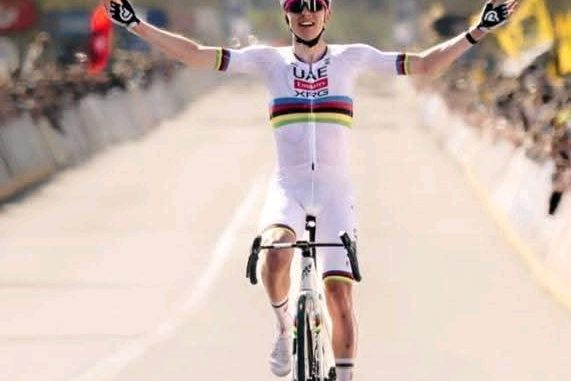
In the world of professional cycling, where grit meets glory and the journey often eclipses the destination, few stories captivate the imagination quite like those of Mathieu van der Poel, Wout van Aert, Tadej Pogačar, and the rising prodigy known simply as Taurus.
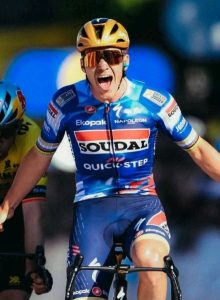
Mathieu van der Poel, hailing from the Netherlands, was born into cycling royalty. The grandson of Raymond Poulidor and son of Adri van der Poel, cycling was more than a passion—it was a legacy. From a young age, van der Poel demonstrated not just raw talent but also a fierce determination to create his own identity, separate from the shadows of his legendary lineage. His early years were spent mastering multiple disciplines, from cyclocross to road racing and even mountain biking, where he learned the value of versatility and resilience. Those formative races, often in muddy fields and sparsely attended circuits, were where he built the foundations of the champion he would become. The long, grueling winters of cyclocross hardened him not just physically, but mentally—a key advantage he’d later bring to the brutal cobbled classics and Grand Tours.
Wout van Aert, his long-time rival and compatriot from Belgium, shares a similar story of early exposure and disciplined growth. From humble beginnings in Herentals, van Aert’s journey was characterized by discipline and a deeply rooted sense of national pride. Like van der Poel, he emerged through the cyclocross ranks, winning world championships and gaining recognition for his dominance across diverse terrains. But beyond the rivalry and comparisons, van Aert carved out his own legacy through sheer consistency and team spirit. His commitment to excellence, both as a leader and a domestique, made him a linchpin for Jumbo-Visma, especially during mountain stages and time trials in the Grand Tours. From an early age, he was mentored by veterans of Belgian cycling, who instilled in him the ethos of sacrifice and tactical intelligence. His transformation from cyclocross world champion to one of the most versatile road racers of his generation was no accident—it was the result of meticulous planning, grueling training, and the unshakeable belief that hard work trumps raw talent.
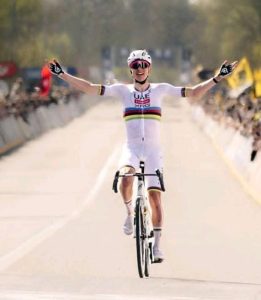
Tadej Pogačar, the Slovenian sensation, offers a slightly different narrative—a story of meteoric rise fused with boyish charm and an almost paradoxical calm under pressure. Born in Komenda, a small Slovenian town, Pogačar started riding bikes with his older brother. His talent was spotted early by local coaches, and he was nurtured within a growing Slovenian cycling ecosystem that had begun to produce world-class riders. His early training was methodical, and he was groomed by mentors who emphasized both physical development and strategic racing acumen. Pogačar’s dominance at a young age was not only a result of talent but also the Slovenian model of youth development, which combined state-supported sports science with grassroots passion. By the time he exploded onto the world stage with a jaw-dropping win in the 2020 Tour de France, he had already been through years of scientific training, high-altitude camps, and psychological conditioning. What sets him apart is his ability to stay grounded, even in moments of immense pressure—a quality that reflects the well-rounded approach to youth training he received.
And then there is Taurus—the enigma, the rising star whose story is still unfolding. Not much is known about his personal background yet, as his identity is carefully protected by his team and family, but those close to the sport already whisper his name with reverence. What makes Taurus intriguing is not just his performance metrics, which rival those of Pogačar at the same age, but the story of how he’s being developed. Taurus is the product of a new age of cycling development—one that blends data analytics, AI-driven performance monitoring, and old-school mentorship. His training regime, guided by former pros and cutting-edge sports scientists, is tailored to prevent burnout while fostering tactical intelligence and emotional resilience. Unlike many prodigies, Taurus isn’t being rushed into the limelight. His managers have taken cues from the journeys of van Aert and van der Poel—both of whom matured through a diversified racing calendar and were not forced into early specialization.
What unites these four athletes—each at a different point in their career—is the journey that started long before they were household names. In their youth, they were taught not just to win, but to endure. They learned to suffer in silence, to find joy in the grind, and to respect the heritage of the sport. Whether through the muddy circuits of cyclocross, the winding Slovenian hills, or the modern training facilities now shaping Taurus, the lesson remains the same: champions are not born, they are built.
Their journeys also reflect a broader evolution in the sport of cycling itself. The days of purely instinctive, natural riders dominating the peloton are giving way to a new era where data, sports science, and holistic development play crucial roles. However, the heart of the sport—courage, rivalry, pain, and passion—remains unchanged. And in that crucible, future legends are still forged.
As the world waits to see how Taurus will emerge onto the global stage, the examples set by van der Poel, van Aert, and Pogačar serve as both inspiration and blueprint. Their stories are a testament to what’s possible when talent meets discipline, and when youth training is not just about creating winners, but about nurturing character, resilience, and love for the sport.
In a world increasingly driven by immediate results and quick fame, these athletes remind us that true greatness lies in the long game—in the hours nobody sees, the sacrifices few appreciate, and the relentless pursuit of something far beyond trophies. It’s about becoming not just a champion, but a symbol of what the sport can aspire to be.
Leave a Reply