
Tadej Pogačar has spoken out with rare concern as growing pro-Palestine protests spill into the world of professional cycling, following a series of disruptions that began at the Vuelta a España. The Slovenian superstar, known more for his calm demeanor and focus on racing than for weighing in on off-the-bike controversies, admitted that the rising tension has unsettled many riders in the peloton. “I think all the riders are a little scared of what could happen,” Pogačar said in a post-race interview.
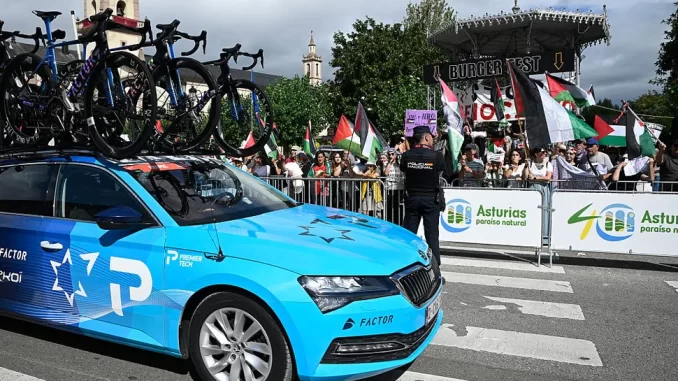
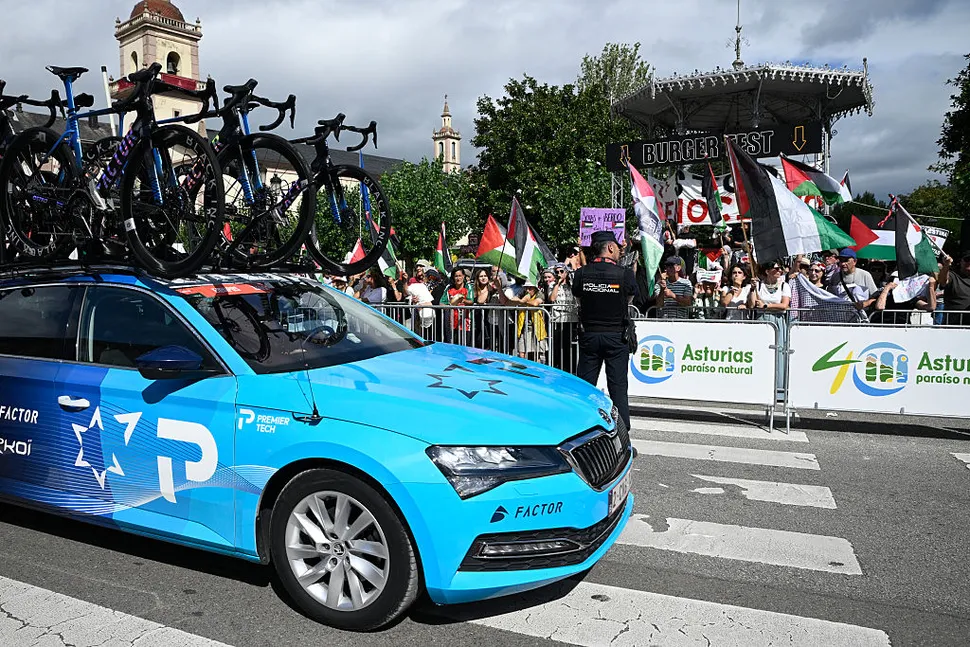
The issue erupted after multiple stages of the Vuelta saw protesters enter the course, waving flags and banners, and in some cases forcing temporary stoppages of the race. Demonstrators called for heightened international awareness of the ongoing conflict, and cycling’s global platform suddenly became an unexpected stage for their message. While organizers managed to restore order each time, the repeated interruptions have raised questions about rider safety, the security of race routes, and the politicization of sporting events.
Pogačar, who has consistently advocated for riders’ well-being throughout his career, admitted that the uncertainty is taking a toll. “You’re riding at full speed, focused only on the road, the breakaways, and the rivals around you, and then suddenly you see people stepping into the course. It shakes you. We don’t know what their intentions are. Even if the protests are peaceful, in the heat of a race, it only takes a second for something dangerous to happen.”
His comments reflect a sentiment echoed by several teams and fellow riders who have quietly raised concerns with race organizers and the UCI. While there is respect for the right to protest, there is also fear that demonstrations could spiral into unsafe situations for athletes, staff, and spectators. Some riders worry about the possibility of crashes or more serious incidents if protesters interfere with key race moments such as sprint finishes or mountain descents.
The protests have sparked a broader debate within the cycling community. Should cycling, a sport that travels through public roads and cities, be considered fair ground for political demonstrations? Or does this set a precedent that compromises the safety and integrity of the competition? Pogačar acknowledged the complexity of the issue but remained clear about one priority. “We’re not politicians,” he said. “We’re athletes. All we want is to race safely and give the fans a show. If these protests continue, we need to find a solution that ensures safety first.”
Race organizers are now under pressure to increase security measures, a difficult task given the sheer length and openness of cycling routes compared to enclosed stadium sports. Meanwhile, the growing visibility of the protests has ensured that the issue will remain in the headlines as the cycling calendar moves forward.
For Pogačar, the timing is particularly delicate. As one of the sport’s biggest stars, his every word carries weight. His decision to voice concerns reflects not only his leadership role in the peloton but also the seriousness with which riders are beginning to view the situation. “We respect people’s voices and their causes,” he concluded. “But when the road becomes a place of fear instead of freedom, something has to change.”
With protests expected to continue at upcoming races, cycling faces a difficult crossroads: balancing the right to peaceful expression with the need to guarantee the safety of its athletes. For now, riders like Pogačar will keep pushing forward, even as uncertainty grows around what might happen the next time banners and bicycles share the same stage.
Leave a Reply