
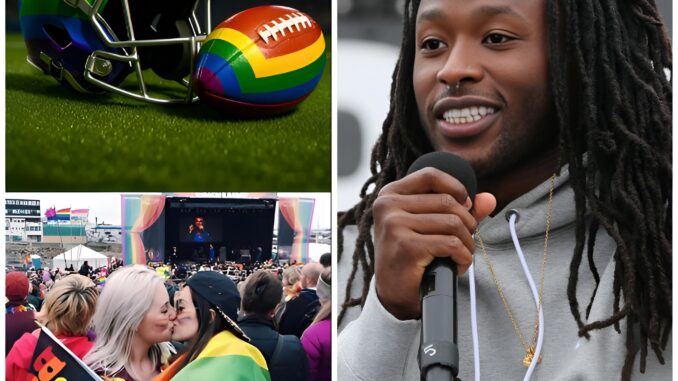
A major controversy has erupted around New Orleans Saints star running back Alvin Kamara after reports surfaced that he has publicly refused to wear a helmet or use a football displaying an L.G.B.T. rainbow symbol for the remainder of the season. According to multiple sources familiar with the situation, Kamara communicated his position directly to team officials, later reinforcing it with a statement that quickly ignited intense debate across the sports world. In his remarks, Kamara emphasized that his objection was rooted in his belief that football should remain centered on competition and performance, saying the sport “should focus on the game — on competition and winning,” and not become what he described as a platform for political or ideological messaging.
The response was immediate and explosive. Within minutes of the news breaking, social media platforms were flooded with reactions from fans, analysts, former players, and advocacy groups on both sides of the issue. Some supporters praised Kamara for standing by his personal convictions and framed his stance as a call to keep sports separate from broader social debates. Others strongly criticized him, accusing the star running back of dismissing the league’s efforts toward inclusion and alienating a portion of the fanbase that has long felt represented by such initiatives.
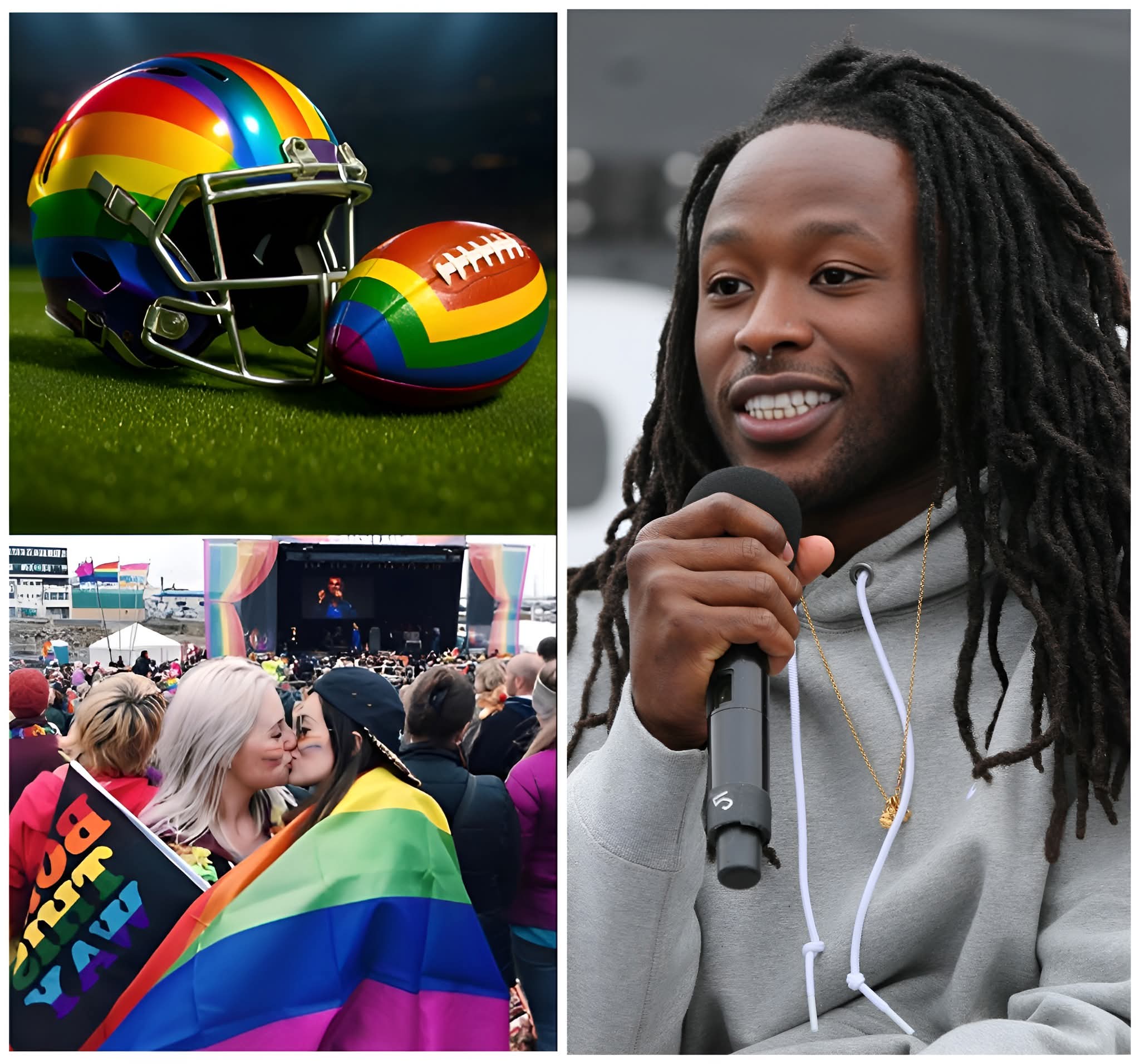
The Saints organization, caught in the middle of the growing firestorm, moved quickly. Team sources confirmed that an emergency internal meeting was held involving senior leadership, coaching staff, and legal advisers to assess the situation and determine how to proceed. While the team has not yet issued a formal public statement, insiders say the discussion centered on balancing player autonomy, league policies, sponsor relationships, and the expectations of a diverse fanbase. One source described the atmosphere inside the building as “tense but professional,” noting that leadership understands that any decision will likely disappoint a segment of supporters regardless of the outcome.
League-wide implications are also being closely examined. The NFL has spent recent years promoting inclusion initiatives, often incorporating symbolic elements during designated weeks or events. While participation is generally expected as part of league-wide standards, there have been occasional instances of players expressing discomfort or dissent, though rarely from someone of Kamara’s profile and influence. Several league insiders indicated that the NFL office is monitoring the situation closely, aware that how it is handled could set a precedent for future conflicts between individual expression and organizational messaging.
Kamara, one of the most recognizable faces of the Saints and a leader in the locker room, has not backed away from his stance amid the backlash. Those close to him say he believes his position has been misunderstood, stressing that he is not attacking any group but rather expressing his view on what professional sports should represent. Teammates, according to sources, have reacted with a range of emotions, from quiet support for his right to personal beliefs to concern about the potential distraction during a critical stretch of the season. Coaches are said to be focused on keeping the locker room united and the team’s attention on football.
Fans in New Orleans and beyond remain deeply divided. Some season-ticket holders have voiced disappointment and frustration, while others have rallied behind Kamara, arguing that players should not be compelled to participate in symbolic gestures that conflict with their personal views. Sponsors and business partners are also reportedly evaluating the situation, aware that the controversy could have financial and reputational consequences for all parties involved.
As the situation continues to unfold, the Saints find themselves navigating one of the most delicate moments of the season — one that extends far beyond wins and losses on the field. With emotions running high and public scrutiny intensifying, the organization’s next steps will likely shape not only its relationship with Kamara, but also how similar disputes are handled across the league in the future. What remains certain is that this issue has already left a lasting mark, ensuring that whatever resolution emerges will resonate well beyond the walls of the Saints’ facility and into the broader conversation about identity, expression, and the role of professional sports in modern society.
Leave a Reply