

Mathieu van der Poel is facing renewed scrutiny from cycling officials after the Union Cycliste Internationale (UCI) confirmed it is reviewing his controversial maneuver during the recent World Championships. The Dutch superstar, known for his explosive style and fearless racing tactics, was filmed briefly riding onto a sidewalk to overtake slower riders during a congested section of the course. The moment, which has circulated widely on social media, sparked immediate debate among fans, commentators, and fellow riders about whether van der Poel’s move constituted a violation of UCI race regulations.
According to reports, the governing body acknowledged that the incident could be viewed as a breach of racing conduct since riders are expected to remain on the designated course at all times. However, early assessments from officials suggested that while the move was technically outside the race boundaries, it did not endanger spectators or offer van der Poel a significant competitive advantage. The UCI stated that disqualification is not the standard sanction for such an infraction unless it is deemed dangerous or clearly alters the race’s outcome.
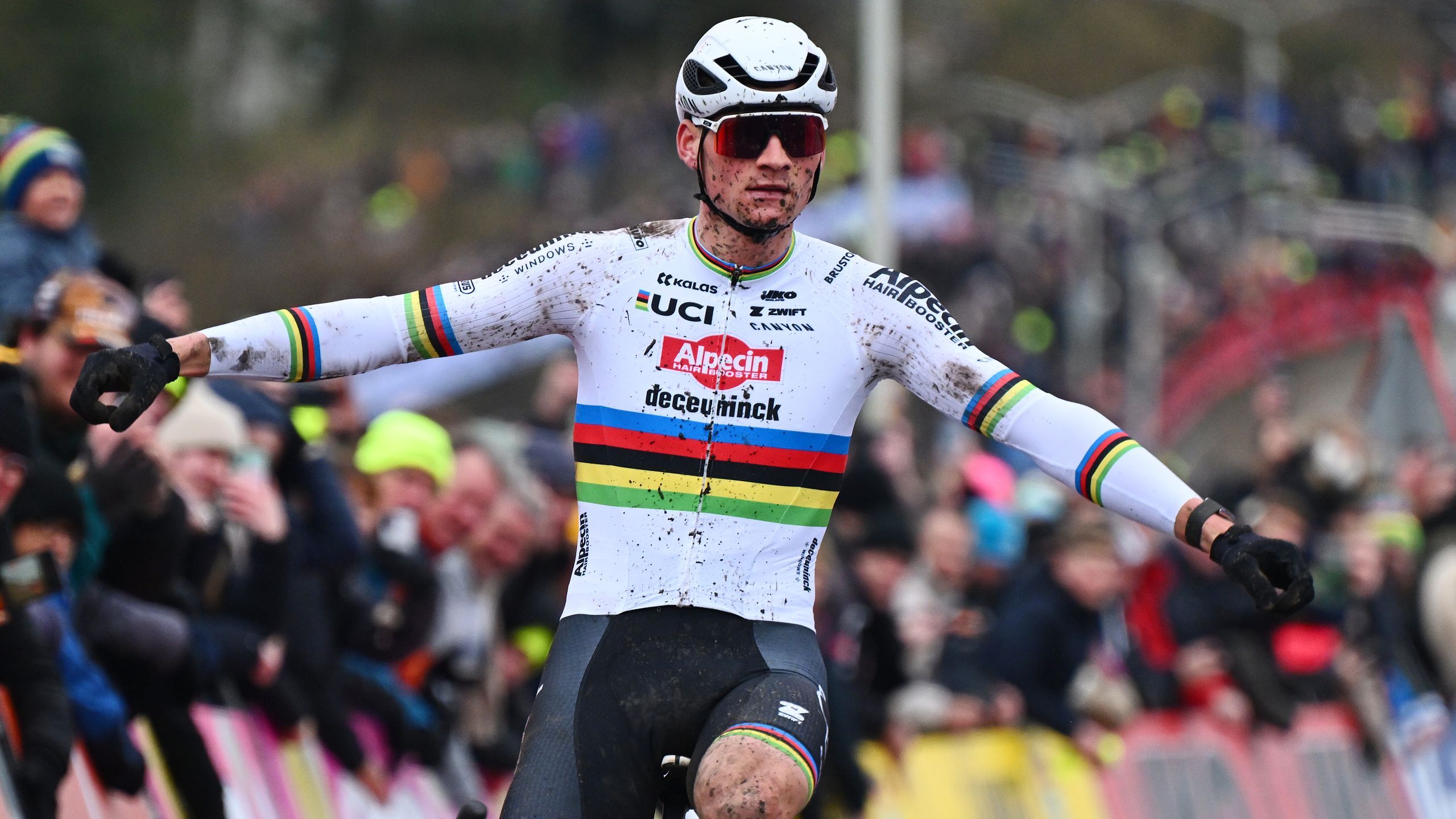
During the race, van der Poel’s instinctive decision to move onto the pavement appeared to be a split-second reaction to avoid a pile-up in front of him. Witnesses described the maneuver as smooth and controlled, with van der Poel maintaining composure as he rejoined the main path without obstructing or endangering others. Still, the incident reignited a familiar debate about how far professional riders can push the limits of race rules in pursuit of position or momentum.
Critics argued that regardless of intent, stepping off the course undermines the integrity of competition and sets a concerning precedent for younger riders. Others defended van der Poel, pointing out that his decision likely prevented a crash and demonstrated exceptional awareness rather than recklessness. The UCI’s inquiry, according to sources close to the situation, aims to reinforce consistency in rule enforcement rather than target van der Poel specifically.
For his part, van der Poel has not issued a formal statement on the matter, though individuals within his team suggested he viewed the move as a natural reaction in a chaotic race environment. The Alpecin–Deceuninck squad reportedly cooperated fully with UCI officials and expressed confidence that the investigation would confirm there was no deliberate attempt to gain an unfair advantage.
The episode underscores the ongoing tension between safety, fairness, and the instinctive, unpredictable nature of elite cycling. Van der Poel, who has built a reputation as one of the sport’s most daring and technically gifted riders, continues to attract both admiration and controversy for his aggressive racing style. Whether the UCI decides to impose a formal sanction or simply issue a warning, the discussion around this moment is likely to shape future interpretations of race conduct, particularly in high-stakes events where split-second decisions can define careers.
Leave a Reply